

Experts Sound the Alarm Over Disturbing Effects on Brain and Body
In a shocking revelation, a new wave of scientific studies is shedding light on the potential dangers lurking in the sleek design of noise-canceling headphones. Marketed as the ultimate solution for peace and focus, these devices might actually be wreaking havoc on our brains, inner ears, and even our mental well-being. Could these seemingly harmless gadgets be slowly driving us toward a future of mental decline and physical sickness?
Recent research, conducted by the controversial yet highly regarded Institute for Neurocognitive Health (INH), reveals a disturbing correlation between the prolonged use of noise-canceling technology and the rise of various health issues, from dizziness and migraines to cognitive disorientation and even sleep disturbances. “What many don’t realize is that noise-canceling headphones don’t just block out sound – they actively manipulate the way our brains process auditory information,” says Dr. Alina Cortner, the lead researcher at INH. “This creates a false sense of balance and can actually confuse the brain’s natural ability to orient itself. It’s like training the brain to ignore critical information it needs to function properly.”

According to the studies, which have yet to be peer-reviewed, the primary culprit lies in the “anti-noise” frequencies that are emitted by the headphones to cancel out surrounding sounds. These frequencies, typically designed to neutralize low-frequency sounds like engine hums or background chatter, can interfere with the delicate balance of the inner ear, leading to a phenomenon researchers have coined “sensory overload syndrome.” Symptoms include brain fog, memory lapses, irritability, and an alarming increase in the prevalence of tinnitus (ringing in the ears). Dr. Cortner warns that these symptoms are merely the beginning: “As more people begin using noise-canceling technology for hours a day, we may soon face an epidemic of neurological disorders linked to these devices.”
The shocking part? Studies from the controversial Global Neuroscience Institute suggest that these effects may even be irreversible. “The brain is incredibly adaptive, but constant exposure to abnormal auditory input – like that from noise-canceling headphones – can slowly rewire the neural pathways,” explains Dr. Ronald Vickman, a former neuroscientist with the organization. “It’s a form of sensory deprivation, but without the calming effects. The brain essentially loses its natural rhythm.” Experts worry that, over time, this rewiring could result in permanent cognitive decline, leading to conditions such as early-onset dementia or severe anxiety.
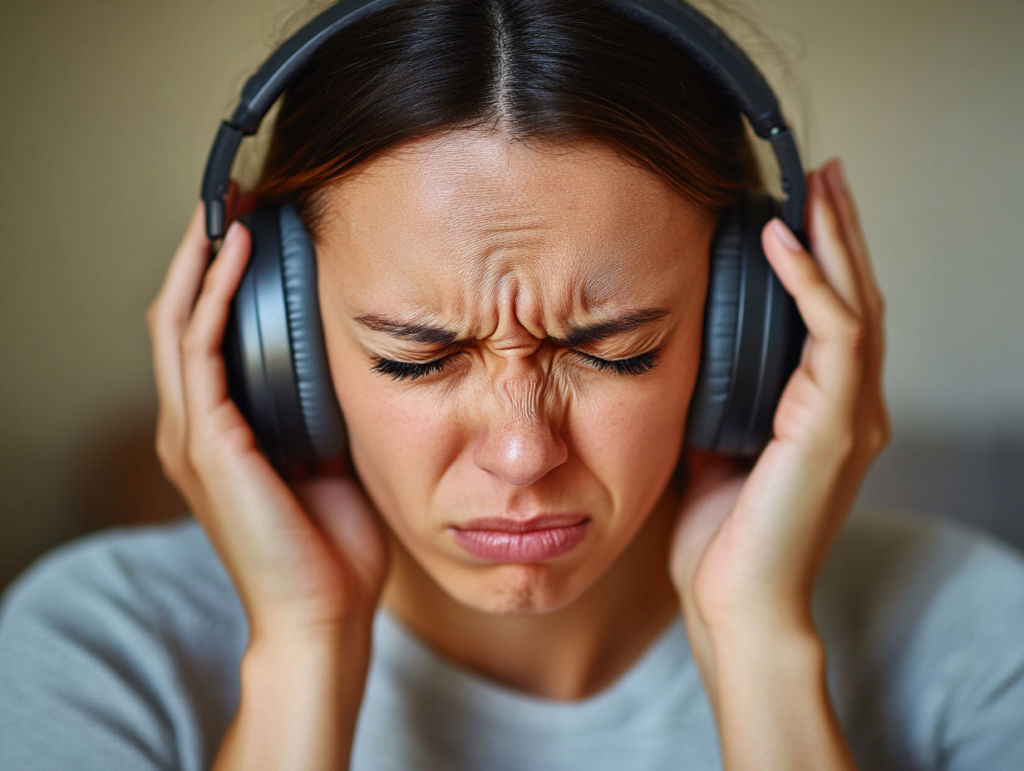
Not only is our brain at risk, but our bodies may also be suffering from the long-term effects of noise-canceling technology. According to a report from the National Health Association, prolonged exposure to these headphones could lead to “mysterious” physical ailments that doctors are only just beginning to connect with their use. Muscle tension, jaw pain, and even issues with vision – such as blurry eyesight and sensitivity to light – have been reported in growing numbers among regular users. “These headphones are literally altering the way our bodies respond to the world,” says Dr. Rebecca Hayes, a physician specializing in audio-related injuries. “The constant suppression of external sounds leads to increased internal stress responses. It’s like living in a vacuum.”
While the manufacturers of noise-canceling headphones continue to dismiss these findings, claiming that their products are “perfectly safe,” an increasing number of medical professionals are urging consumers to rethink their reliance on this technology. “What we’re witnessing is a modern epidemic of quiet dangers,” says Dr. Hayes. “We’re so obsessed with quieting the world around us that we’re unknowingly silencing the important signals our bodies and minds need to stay healthy.”
So, the next time you slip on a pair of noise-canceling headphones, ask yourself: What price are you willing to pay for silence? The science might be saying we’ve been too quiet for too long, and the consequences could be far worse than a little background noise.
Leave a Reply